Kleenex: The Agony Aunt
A Kleenex × Ogilvy Mumbai ambient print project on emotional relevance in everyday products
Client · Kimberly-Clark (Kleenex)
Industry · FMCG / Consumer
Team · Bosky Doshi, Ogilvy & Mather Mumbai
My Role · Creative concept, art direction
Methods · Ambient print, contextual placement
Timeline · 2007
Outcome · Clio finalist, Abby finalist, Communication Arts 2007 feature
Kleenex tissues are everywhere on desks, in handbags, beside beds. Present for the most human moments, but rarely noticed until needed. The brief was simple: sell tissues. The work became something else entirely.

The medium wasn't the message. The medium was the comfort.
The Challenge
The original brief was straightforward, drive awareness for a commodity product. But commodity briefs are invitations to reframe. Tissues aren't functional objects. They're emotional ones. People don't reach for them when they're practical. They reach for them when they're undone. The real brief wasn't about selling tissues.
It was about being present in the right moment, in the right way.


A glimpse of the process
There was no lengthy research phase. Just close reading of the world as it already existed. Flipping through magazines, the agony aunt page appeared, as it always does, somewhere in the middle, dense with letters from strangers pouring their hearts out. The idea was already there, fully formed, hiding in plain sight.
The best briefs don't get solved. They get noticed.
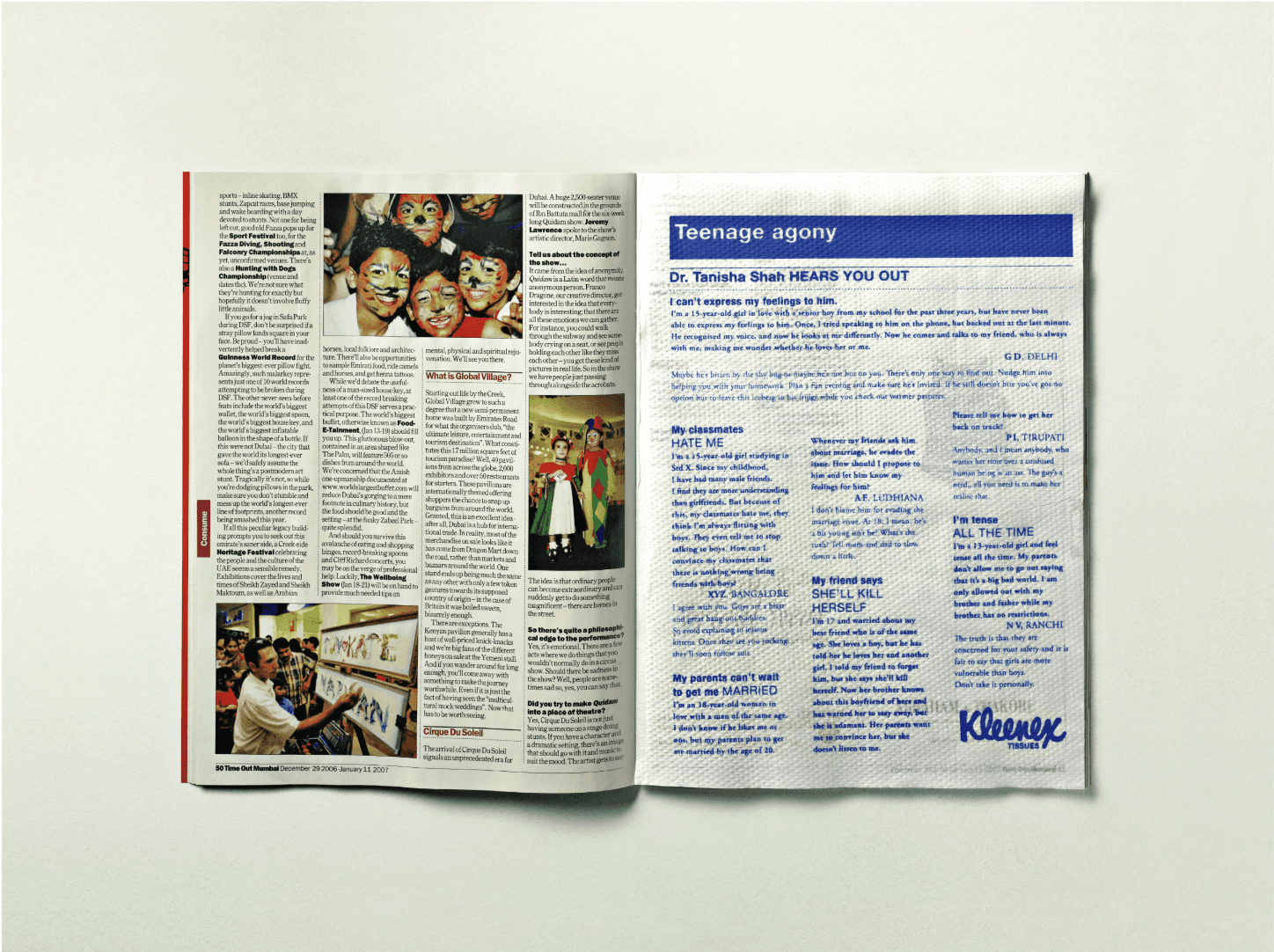
The agony aunt column, a fixture of Indian magazines for decades. Letters from real people, real feelings, real need for comfort.
The insight
People don't reach for tissues when they're practical. They reach for them when they're undone. The agony aunt page was already the emotional territory Kleenex lived in it just hadn't been printed on the right material yet.
The tissue as reading surface. Comfort delivered before the first word is read.

The design response
The teenage agony aunt column, a staple of popular Indian magazines, letters raw with anxiety and longing was reprinted on Kleenex tissue. The medium became the proof. You read about heartbreak. You held the thing you reach for when you cry. No claim needed.

The impact
When the industry stopped to look.
• Clio Awards 2007 - Finalist
• Abby Awards 2007 - Finalist (two nominations)
• Communication Arts 2007 - Featured work
Key takeaways
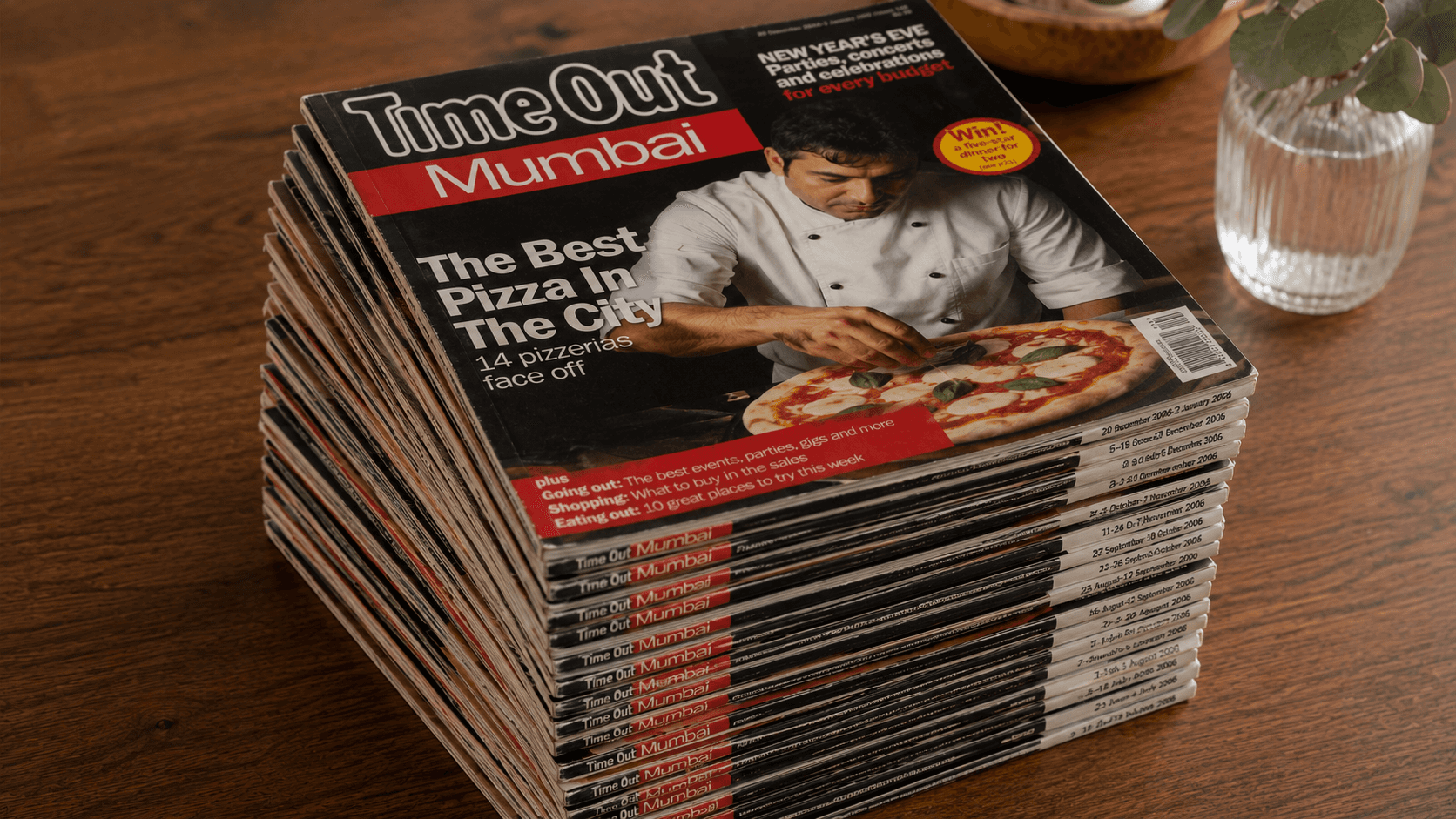
The client started cautiously, 200 copies of Timeout Mumbai. Then saw what happened. Then printed 5,000 across Mumbai and Pune. No one asked for a case study. The numbers made the argument. The lesson wasn't about the idea, it was about what happens when a medium earns its place. Consumers didn't just notice. They responded. And clients follow response.
